Underfloor heating is one of the most requested upgrades in London renovations: no radiators on the walls, warm floors underfoot and even heat across the room. Planex started as a heating and plumbing company, so this is a subject close to our hearts. Here is what you need to know before choosing a system. Prices exclude VAT.
Wet or electric?
| Wet (water) system | Electric system | |
|---|---|---|
| How it works | Warm water from a boiler or heat pump runs through pipes in the floor | Heating mats or cables under the floor finish |
| Best for | Whole floors, extensions, new builds and major refurbishments | Single rooms — bathrooms, en-suites, small kitchens |
| Installation cost | from £95 per m² | from £70 per m² |
| Running cost | Low — especially with a heat pump | Higher per hour of use |
| Floor height needed | 15–25 mm (overlay boards) to 65–75 mm (screed) | A few millimetres |
How a wet system goes in
- Design: a heat-loss calculation for each room decides pipe spacing — tighter along large windows, wider in the middle of rooms.
- Insulation: rigid insulation under the pipes so the heat goes up, not into the ground.
- Pipework: one or more loops per room, each returning to a central manifold with flow meters and actuators.
- Pressure test: every loop is tested before anything covers it.
- Screed: traditional sand-cement or a self-levelling liquid screed, which wraps around the pipes and spreads heat evenly.
- Commissioning: the system is warmed up slowly before floor finishes go down.
You can see each stage in our oak-frame new build and underfloor heating with liquid screed projects, and the manifolds in our plant rooms.
Underfloor heating and heat pumps
Because the whole floor is the heat emitter, underfloor heating works at low water temperatures — ideal for an air-source heat pump. If a heat pump is likely in the future, specify the pipe spacing for low flow temperatures now; it costs little extra at installation.
Which floor finishes work?
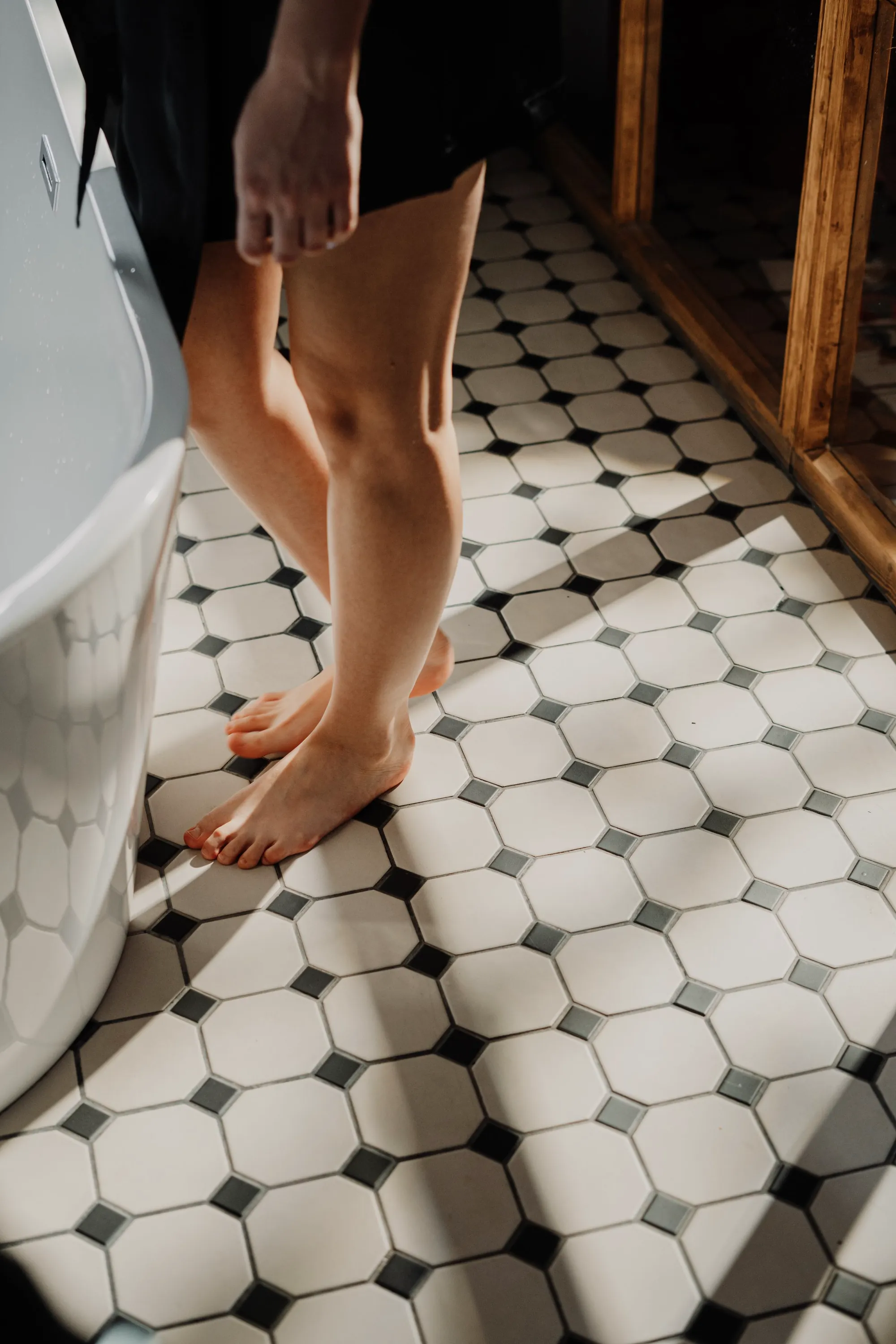
- Stone, porcelain and tiles: the best conductors — warm quickly and evenly.
- Engineered wood: works well; check the manufacturer's maximum surface temperature (often 27 °C).
- Carpet: possible, but keep the combined tog of carpet and underlay low (around 2.5 or less).
Can it go into an existing house?
Yes. In a full refurbishment the floors are often lifted anyway, so a screeded system is straightforward on the ground floor. Upstairs, or where floor height is limited, low-profile overlay boards add only 15–25 mm. For a single bathroom, electric mats under the tiles are usually the sensible choice.
Read more about our heating & plumbing work, or ask for a quote with a loop layout for your home.
Frequently asked questions
How much does underfloor heating cost in London?
Wet (water) underfloor heating starts from around £95 per m² installed and electric underfloor heating from around £70 per m², excluding VAT and floor finishes.
Is wet or electric underfloor heating better?
Wet systems are best for whole floors, extensions and major renovations and are cheaper to run, especially with a heat pump. Electric systems are cheaper to install and ideal for single rooms such as bathrooms.
Can underfloor heating be fitted in an existing house?
Yes. Screeded systems suit ground floors during a refurbishment, low-profile overlay boards add only 15–25 mm, and electric mats can go under new tiles in a bathroom.
Want a price for your project?
Use our calculator for an instant range, or book a free survey for a fixed, itemised quote.